Fundamentally strength and conditioning improvements are about creating the necessary training stimulus to your tissues and nervous system, and having the nutrition to support and augment those changes. Nutrition provides both the substrates, and signalling for progressive growth and adaptations.
If you are in the club, do tag me @usefulcoach in your trainingposts, and use hashtag #riceclub.
#riceclub
The central “applied nutrition” principle of useful. coaching is using nutrition as a lever to change the state of the body during the window of time when the “System” (physiological and psychological) is under the greatest demand.
It’s viewing nutrition as not just providing energy “fuelling”, but rather as the means to…
- Increase intensity volume – how much work can be performed at the highest intensity
- Decrease recovery time – how to ensure subsequent sessions maintain that intensity volume
- Decrease risk of injury – how to lower risk of cumulative strain from under-recovery
Fundamentally strength and conditioning improvements are about creating the necessary training stimulus to your tissues and nervous system, and having the nutrition to support and augment those changes. Nutrition provides both the substrates, and signalling for progressive growth and adaptations.
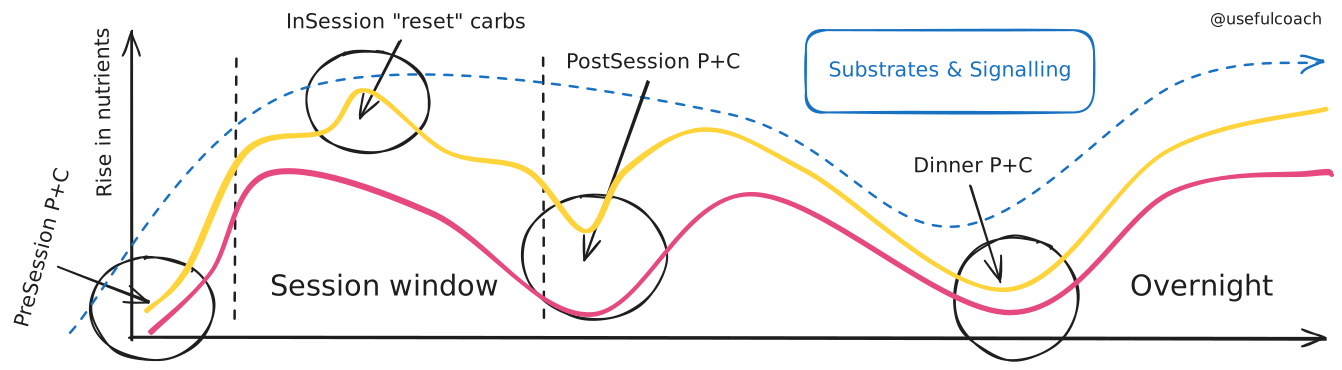
Having now coached well over 400 clients, the practice that I see producing real-world results, is consuming a significant amount of protein and carbohydrate before sessions, not just “having a snack”.
- PreSession: ~25g protein, ≥1g/kg carbohydrate (65g at 65kg)
- InSession: ≥30g carbohydrate (repeat if multiple hours)
- PostSession: ~25g protein, optional but recommended ≥1g/kg carbohydrate (65g at 65kg)
Consuming ≥1g/kg of carbohydrate PreSession is where you will noticeably feel the difference. One client said his minimum threshold was 75g, and that since applying this strategy he has had some of the best board climbing sessions of his life.
Applying this strategy, feedback is…
- Sustained power and concentration during sessions without any drop-off
- Finishing sessions feeling like they could have done even more work
- No cravings for snacks post sessions, after dinner, and throughout the week
- Being able to diet without feeling like they have lowered their energy intake
- Feeling recovered, less sore, solid, robust, and resilient
SAS application
The most versatile and gut friendly practice I have found is using cooked rice. Pair your rice with fruit, and something sugary like a granola bar. Then an easy digesting protein source such as a whey, or a plant-based protein shake providing ~25g protein per serving.
- Consume 1–1.5 cups (150–250g) of cooked salted rice ~40 minutes before your training or performance sessions. This provides ~40–60g of easily digestible carbohydrate.
- Pair the rice (“carb stack”) with other sources such as fruit or sugary snacks to achieve ≥1g/kg carbohydrate
- You may prefer to use a sweeter “rice pudding” strategy, such as mixing the rice together with honey, raisins, banana
- It’s best not to consume fats or oils PreSession, as they can slow gut transit, and you could feel fuller
- Repeat this again immediately after your session, or at least just the protein
I personally eat 250g of cooked basmati rice, a banana, and caramel wafer. This provides ~100g of carbs, and “carb stacking” like this allows you to easily eat more. For my typical 2-2.5-hour mixed training and climbing sessions, I use this strategy before and immediately afterwards. So it is a cumulative ~200g carbohydrate, and ~60g protein across the training window.

How I cook rice
This recipe will produce ~3 cups of cooked rice. I personally use basmati (Tilda), but this should work for most rice varieties.
- Add 1 cup of uncooked rice to a pan with 2.5 cups of cold water, and salt
- Place lid on the pan, and bring to the boil
- As it hits boiling point, turn down to a simmer, stir, replace lid, and set your timer for 10 minutes
- Around 5 minutes, check and give the rice a stir, replace lid, and continue simmering
- As the timer finishes 10 minutes, turn off the heat, stir, replace lid, and allow rice to rest for 2–3 minutes
- You now have around 500g (18oz) of cooked rice, which can be split into your pre-/post-session strategy
Jason’s onigiri blocks
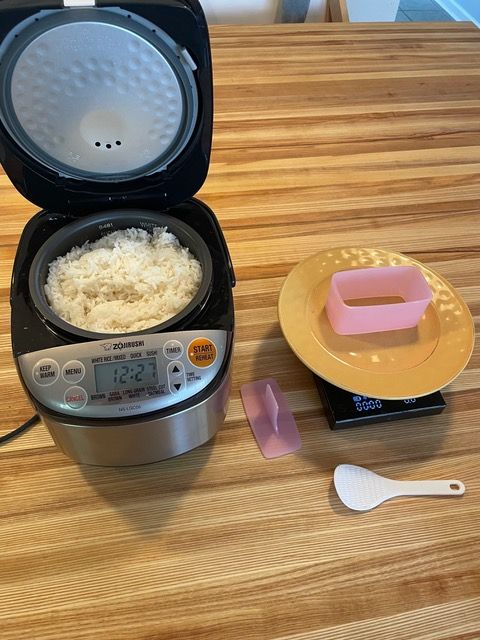
My coaching client Jason Leddington used onigiri rice blocks.
I often make several blocks at a time but try to use them within 24 hours, as they start to harden if they’re refrigerated for too long. If I know that I’m going to train after work, I’ll take a block with me and eat it while I’m walking to the car for the drive home, or even as I drive. — Jason Leddington (@the8aproject)
- Onigiri Japanese rice balls
- Japanese short-grain rice (Nishiki) is sticky enough to form cohesive shapes
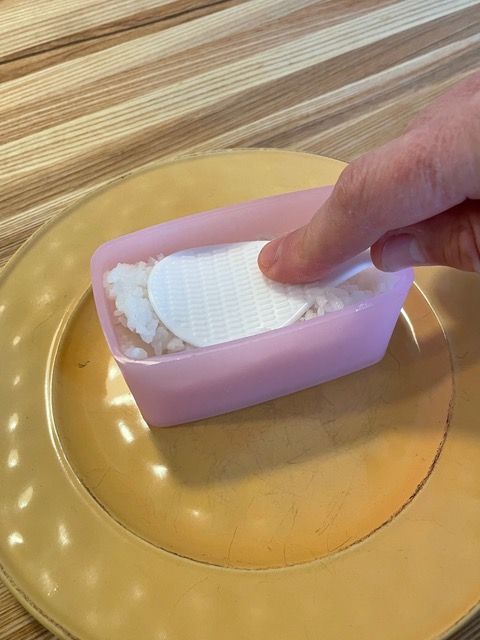
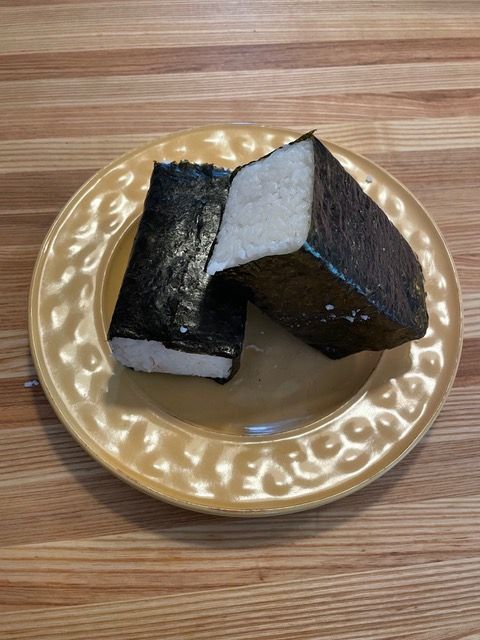
- ~240g rice blocks can be made using these pink onigiri molds
- Season with a layer of miso, furikake, or crunchy pickled umeboshi plums, and wrap in nori sheets